Tuesday, May 1, 2012

2011 Brabus Mercedes-Benz G-Class 800 Widestar

BRABUS 800 WIDESTAR is powered by a twelve-cylinder bi-turbo high-capacity engine with a rated power output of 800 hp (788 bhp) / 588 kW. It takes the crown from its predecessor made by the same company, the BRABUS G V12 S with 700 hp (690 bhp) / 515 kW. Visually the power off-roader sets itself apart with its WIDESTAR wide-body equipment and 23-inch BRABUS “PLATINUM EDITION” forged wheels.

BRABUS builds the five-door vehicle by hand based on the current Mercedes G-Class. Like all special models from BRABUS, recognized by the German Federal Vehicle Registration Agency as a car manufacturer, the BRABUS 800 WIDESTAR is available with an extensive luxury equipment package. 

The basis for the enormous increase in power is the displacement increase. Displacement of the three-valve engine is increased from 5.5 to 6.3 liters (336 to 384 cubic inches) in the state-of-the-art BRABUS engine shop with the help of a special crankshaft with longer stroke and larger pistons and corresponding cylinder bore. Additionally the cylinder heads are optimized for mixture flow and fitted with special camshafts.

The engine peripherals now include an entirely new intake system and the BRABUS 800 bi-turbo system with two special manifolds with integrated turbine housings and high-performance turbochargers, and four water-to-air intercoolers. This ensemble is joined by a stainless-steel high-performance exhaust system custom-developed for the BRABUS 800. It features free-flow metal catalysts and four chrome tailpipes that exit in pairs in front of both rear wheels.

Precision mapping for engine electronics coordinate the perfect interaction of all new components and ensures exemplary smoothness, maximum power yield and low emissions.

With these modifications the engine in the BRABUS 800 WIDESTAR delivers a staggering rated power output of 800 hp (788 bhp) / 588 kW at 5,500 rpm and an even more impressive peak torque of 1,420 Nm (1,047 lb-ft), already available from a low 2.100 rpm. In the vehicle peak torque is limited electronically to 1,100 Nm (811 lb-ft). The high-tech lubricants for the entire powertrain come from technology partner ARAL.

Combined with a reinforced five-speed automatic transmission and permanent four-wheel drive the engine shoots the BRABUS 800 WIDESTAR from rest to 100 km/h (62 mph) in just 4.0 seconds. Top speed is electronically limited to 240 km/h (149 mph). Without the limiter the high-performance off-roader would be capable of reaching 270 km/h (168 mph).

The WIDESTAR fender flares create space for extremely large wheels and tires. BRABUS offers the owner of the wide-body version, which is also available for all regular five-door G-Class models, a wide range of custom-tailored tire/wheel combinations with diameters between 20 and 23 inches. The most exclusive option for the 800 WIDESTAR features size 11Jx23 wheels front and back. Customers can choose from two newly developed forged wheels, the three-piece Monoblock E evo “PLATINUM EDITION” design or the one-piece Monoblock F “PLATINUM EDITION” wheel. The high-performance tires in size 305/35 R 23 come from Pirelli or YOKOHAMA.

For a perfect combination of sporty handling and excellent ride comfort the BRABUS 800 WIDESTAR comes equipped with the innovative BRABUS Ride Control smooth-ride suspension. The BRABUS high-tech suspension system was developed in cooperation with technology partner BILSTEIN, and features two-way electrically adjustable shock absorbers front and back.

Additionally the BRABUS Ride Control suspension features automatic damper adjustment. When the vehicle sensors detect that certain parameters such as speed, lateral acceleration and steering angle might lead to a critical situation the system automatically switches to the firmer sport setting within milliseconds. The sportier damper setup further increases the directional stability of the 4×4. The CAN control unit also detects a return to a more moderate driving style. It then automatically switches the shock absorbers back to the comfort position.


Read more...

2012 BMW 6-Series Coupe

BMW 6-Series Coupe from market launch, and both can claim unique features. These power units are kitted out with BMW TwinPower Turbo technology, including High Precision Injection petrol direct injection, and stand out with their instantaneous power development, majestic in-gear acceleration, outstanding refinement and exemplary efficiency for their output class.

The eight-cylinder power unit in the new BMW 650i Coupe produces maximum output of 300 kW/407 hp from its 4.4-litre displacement between 5,500 and 6,400 rpm. This unique engine, whose turbochargers are positioned in the V-shaped area between the cylinder banks, produces an instantaneous and sustained wave of power, making it a feast for the enthusiast driver. Peak torque of 600 Newton metres (443 lb-ft) is served up between 1,750 and 4,500 rpm. The sporting performance attributes of the V8 engine enable the new BMW 650i Coupe to accelerate from 0 to 100 km/h (62 mph) in 4.9 seconds, leaving the engine electronics to call a halt to proceedings at 250 km/h (155 mph). And yet the range-topping model also demonstrates extraordinary efficiency for this output class, recording average fuel consumption of 10.4 litres per 100 kilometres (27.2 mpg imp) in the EU test cycle, together with CO2 emissions of 243 grams per kilometre.


The new BMW 640i Coupe is powered by a six-cylinder in-line engine in which the BMW TwinPower Turbo technology brings both direct injection and VALVETRONIC fully variable valve control to the table. This combination optimises both the responsiveness and efficiency of the 3.0-litre powerplant, which generates maximum output of 235 kW/320 hp at 5,800 rpm and puts its peak torque of 450 Newton metres (332 lb-ft) on tap between 1,300 and 4,500 rpm. The BMW 640i Coupe completes the sprint from rest to 100 km/h (62 mph) in 5.4 seconds, and its top speed is electronically limited to 250 km/h (155 mph). Average fuel consumption in the EU test cycle stands at 7.7 litres per 100 kilometres (36.7 mpg imp), while CO2 emissions come in at 179 grams per kilometre.


Read more...

2012 Fiat 500 Prima Edizione

These limited-edition 2012 Fiat 500 models were offered to Fiat enthusiasts in the U.S. as a reward for their years of steadfast loyalty to the Fiat brand. The 500 special-edition models represent the first Fiat vehicles to be sold in the U.S. since 1984.

The Fiat 500 Prima Edizione is exclusively available in three colors: Bianco, Rosso and Grigio (Gray). These limited-edition Fiat 500 models are equipped with a manual transmission. Designed as a collector vehicle, each Prima Edizione will feature a sequentially numbered vehicle identification number (VIN) and unique numbered matching badge on the instrument panel.


Read more...

2012 Chevrolet Captiva Sport

Chevrolet Captiva Sport features either an Ecotec 2.4L direct-injected four-cylinder or 3.0L direct-injected V-6 engine – each matched with a fuel-saving six-speed automatic transmission. Because the crossover is based on a proven GM global architecture, only minor revisions are required to meet federal standards, allowing Chevrolet to fast-track the Captiva Sport for the United States.

The Captiva Sport will be offered in LS and LT models, with four trim packages, including an all-wheel-drive model (LTZ). All models feature 17-inch aluminum wheels, XM Satellite Radio, six-speaker sound system, four-wheel disc brakes with antilock, traction control, StabiliTrak electronic stability control, air conditioning, power locks and windows (with driver’s express down) and remote keyless entry.


Uplevel LT and LTZ models include the V-6 engine (with dual exhaust), along with OnStar and Bluetooth phone connectivity. A rear-view camera and leather trim package – including leather-trimmed and heated front seats – are standard on LTZ and available on other trims. The LTZ trim also includes a 10-speaker sound system and a sunroof.


Read more...

2011 Porsche 911 GT3 R Hybrid

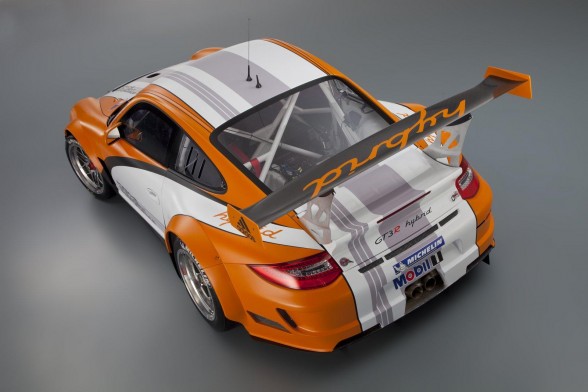
Porsche 911 GT3 R Hybrid is clearly distinguishable from the 2010 model. Thanks to the optimisation of the hybrid system’s high voltage components, the large louvres in front of the rear fenders were no longer necessary. This reduces drag and also lowers fuel consumption. All in all, the weight of the vehicle decreased from 1,350 to 1,300 kilograms.


The cockpit of the 911 GT3 R Hybrid has also been completely revised. Most of the displays and controls have moved to the steering wheel. Drivers can operate the rest of the functions via backlit buttons now situated on the centre console. Priority was placed on the ergonomics and the clear layout for pilots – particularly in darkness.


Read more...

2011 Mercedes-Benz S-Class INDEN Design

The widely known beyond the borders of the Hessian Haiger-Flammersbach noble tuner INDEN Design specializes in the just discussed vehicles, located very near the top category. In this case, Joachim Inden, which is known for so many masterpieces, has undertaken to rebuild the S500 of W221 series from Stuttgart to the facelift version of the S65 AMG. The modifications at the front, the side sills and rear diffuser are associated with the highly visible and distinctive quality of INDEN-Design. Of course, daytime running lights were also installed, and tail lights and mirrors were retouched. The vehicle is completed with the chrome parts, coated with charcoal-gray matte film.


The performance increase up to 420 hp, in particular thanks to a stainless steel exhaust system with two AMG tailpipes left and right, almost inevitably involves lifting of the Vmax limiter. Due to the increased power, the braking system was “converted” to the S600 V12 BiTurbo model with 6-piston front calipers and 4-piston brake calipers. The right set of rims for the perfect vehicle in dimension of 10.5 x 20″ with tires in 265/30-20 at the front and 275/30-20 – at the rear axle was fully installed. The standards of agility are set by lowering by 50 millimeters.


Read more...

Monday, April 30, 2012

2012 Kia Rio

2012 Kia Rio model is longer (by 20 mm), wider (by 25 mm), and lower (by -15 mm) and features a wheelbase extended by 70 mm (to 2,570 mm). With an overall height of 1,455 mm, new Kia Rio is one of the lowest cars in Kia’s European product range.


In many countries, diesel power is the preferred option in this segment and Rio will be available with two versions of Kia’s ‘U2′ power unit – both fitted with 16-valves and a WGT. The 1.4-litre generates 90 ps and 216 Nm of torque, while the 1.1-litre produces 70 ps and 162 Nm. Both engines deliver maximum torque from just 1,750 rpm. A well-proven power unit in the Kia line-up, the updated ‘Gamma’ has friction-reducing modifications and dual CVVT (continuously variable valve timing), to achieve a responsive performance and competitively modest fuel consumption. With maximum output of 109 ps and peak torque of 136 Nm, accelerating to 100 kph in 11.5 seconds and reaching a top speed of 181 kph (112 mph).

Available in the USA with a choice of three trims – LX, EX and SX – the 2012 Kia Rio sedan is powered by a 1.6-litre GDI four-cylinder engine with the option of either a six-speed manual transmission or six-speed automatic. One of only two vehicles in this segment to offer a GDI (Gasoline Direct Injection) engine, the 2012 Rio offers consumers that elusive combination of power and impressive fuel efficiency, achieving class-leading 135HP (100kW) power and class-leading fuel economy rating of 30/40 mpg city/highway (7.8-5.8L/100km). Kia Rio also offers ISG technology, new to the Kia line-up, where the engine turns off when the vehicle is not in motion. The engine restarts automatically when the driver releases the brake pedal, resulting in lower levels of fuel consumption in stop-start urban traffic.

Read more...