Volkswagen London Taxi Concept is powered by an electric motor fed by lithium-ion batteries. With a capacity of 45 kW/h the batteries allow the electric motor to generate a maximum power output of 115 PS, translating to a theoretical top speed of 74 mph.
The Concept, which measures 3,730 mm in length, 1,680 mm in width and 1,600 mm in height, is shorter than the current smallest Volkswagen, the Fox. However its long wheelbase and minimal front and rear overhangs allow it to have a spacious cabin with room for two adults to be seated in comfort plus an allocated area for luggage. At the front, the driving environment is similarly spacious, an impression emphasised by the large glass area.
The range of the Volkswagen London Taxi Concept is estimated at 186 miles between charges with an 80 per cent charge taking around one hour to complete.
Read more...
Showing posts with label Concept Car. Show all posts
Monday, May 21, 2012
2010 Lancia Stratos Concept
The centerpiece of the New Stratos is the 4.3L, light alloy V8 engine from the Ferrari F430 Scuderia, which accelerates the high tech sports car to a speed of 200 km/h in 9.7 seconds. The high performance engine which draws its intake air from the roof spoiler’s side openings, has been equipped with a new control unit and a high-performance exhaust system by Capristo, including manifold and sports cat exhaust system; it delivers 540 hp and provides a torque of over 500 Nm.
The sequential 6-speed transmission received a new mechanical Drexler differential lock, and the modified control electronics now allow for extremely fast gear changes.
The chassis was completely reengineered by the ZF Sachs engineers, including integration of new electronic damper calibration, adjustable via the steering wheel, modified springs and optimized camber and toe values.
Read more...
The sequential 6-speed transmission received a new mechanical Drexler differential lock, and the modified control electronics now allow for extremely fast gear changes.
The chassis was completely reengineered by the ZF Sachs engineers, including integration of new electronic damper calibration, adjustable via the steering wheel, modified springs and optimized camber and toe values.
Read more...
Wednesday, May 16, 2012
2011 GMC Sierra All Terrain HD Concept
2011 Sierra HD underpins the All Terrain HD concept, with a modified, production-based 4WD chassis and the Duramax diesel/Allison 1000 six-speed powertrain. The enhanced suspension and unique body dimensions, including increased ground clearance and wider track, as well as greater approach/departure angles, deliver off-road capability while maintaining HD levels of payload and trailering capacity. The All Terrain HD is painted Iridium Metallic – a dark charcoal color that reveals a reddish, anodized inflection when viewed from certain angles.
Based on the chassis of the 2011 Sierra HD trucks, the All Terrain HD features a fully boxed steel frame with exceptional strength and torsional stiffness. It incorporates the production models’ new independent front suspension and asymmetrical rear leaf-spring suspensions, but with a wider 73-inch (1,853 mm) track (front and rear) that enhances stability during off-road and highway driving. A production Sierra 2500HD has front and rear tracks of 68.8 inches (1,748 mm) and 67.3 inches (1,709 mm), respectively.
The GMC Sierra All Terrain HD concept is propelled by the new, production 6.6L Duramax turbo-diesel V-8 and Allison 1000 six-speed automatic transmission powertrain combination offered in the 2011 Sierra HD trucks. The Duramax is rated at 397 horsepower (296 kW) and 765 lb.-ft. of torque (1,037 Nm). The powerful 6.6L Duramax is more fuel-efficient – with up to 11-percent greater fuel economy than previous versions – and reduces NOx emissions by up to 63 percent. The powertrain’s efficiency is assisted by the Allison 1000 transmission, which requires less engine power to funnel torque to the axles. It also incorporates a “smart” exhaust brake feature that helps save wear on the brakes on downhill grades, a feature available on production Sierra HDs.
Read more...
Based on the chassis of the 2011 Sierra HD trucks, the All Terrain HD features a fully boxed steel frame with exceptional strength and torsional stiffness. It incorporates the production models’ new independent front suspension and asymmetrical rear leaf-spring suspensions, but with a wider 73-inch (1,853 mm) track (front and rear) that enhances stability during off-road and highway driving. A production Sierra 2500HD has front and rear tracks of 68.8 inches (1,748 mm) and 67.3 inches (1,709 mm), respectively.
The GMC Sierra All Terrain HD concept is propelled by the new, production 6.6L Duramax turbo-diesel V-8 and Allison 1000 six-speed automatic transmission powertrain combination offered in the 2011 Sierra HD trucks. The Duramax is rated at 397 horsepower (296 kW) and 765 lb.-ft. of torque (1,037 Nm). The powerful 6.6L Duramax is more fuel-efficient – with up to 11-percent greater fuel economy than previous versions – and reduces NOx emissions by up to 63 percent. The powertrain’s efficiency is assisted by the Allison 1000 transmission, which requires less engine power to funnel torque to the axles. It also incorporates a “smart” exhaust brake feature that helps save wear on the brakes on downhill grades, a feature available on production Sierra HDs.
Read more...
Tuesday, May 15, 2012
2011 Mini Paceman Concept
MINI Paceman Concept has been designed to allow the deployment of the most powerful engine currently available in the MINI palette. The MINI John Cooper Works 1.6-litre twin-scroll turbocharged engine gives the MINI Paceman Concept the capacity to deliver the outstanding performance its appearance promises. This 16 valve, four cylinder unit develops 211 hp and generates maximum torque of 260 Nm (192 lb-ft), the latter value having the capacity to reach 280 Nm (207 lb-ft) in brief bursts thanks to the Overboost function.
Its MINI Countryman roots give this new MINI concept study an ideal platform for the MINI ALL4 permanent all-wheel-drive system. ALL4 features an electromagnetic centre differential positioned directly on the final drive which varies the distribution of power seamlessly between the front and rear axles. In normal driving conditions up to 50 per cent of the drive is sent to the rear wheels, but in extreme situations as much as 100 per cent can be directed to the rear.
The MINI Paceman Concept is, of course, also available in two wheel drive form but harnessing the power of the punchy four-cylinder engine in all-wheel-drive form offers an extra dose of driving fun through a traction-led, sporting expression of the agile handling for which MINI is famed.
Read more...
Its MINI Countryman roots give this new MINI concept study an ideal platform for the MINI ALL4 permanent all-wheel-drive system. ALL4 features an electromagnetic centre differential positioned directly on the final drive which varies the distribution of power seamlessly between the front and rear axles. In normal driving conditions up to 50 per cent of the drive is sent to the rear wheels, but in extreme situations as much as 100 per cent can be directed to the rear.
The MINI Paceman Concept is, of course, also available in two wheel drive form but harnessing the power of the punchy four-cylinder engine in all-wheel-drive form offers an extra dose of driving fun through a traction-led, sporting expression of the agile handling for which MINI is famed.
Read more...
Monday, April 16, 2012
2011 Renault Frendzy Concept
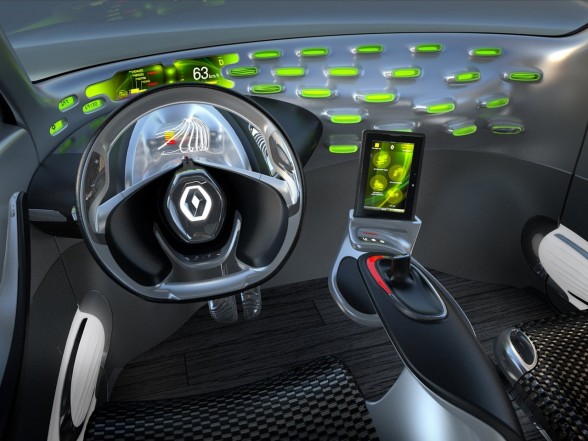
Renault Frendzy Concept car to be produced under the leadership of Laurens van den Acker is the perfect multi-talented vehicle. As a commercial business vehicle which can double up perfectly as a comfortable passenger car, it meets the requirements of business users on the one hand and those of families on the other.
A fully fledged office on wheels with the introduction of the new BlackBerry PlayBook tablet, the electrically powered Frendzy showcases Renault’s new design language.
On the passenger’s side, there’s no glazing and no centre pillar, just one conventional door and one sliding side door which incorporates a 37-inch widescreen display. The user-friendly layout of the driver’s environment and tablet turn Renault Frendzy Concept into a truly interactive and communicative tool. The BlackBerry® PlayBook™ tablet recently launched by Research In Motion (RIM), plugged into the dashboard, has enabled the concept of an office on wheels to become reality. BlackBerry PlayBook is ultra-portable (seven-inch touchscreen, 425g in weight, measuring 130mm x 194mm x 10mm), yet it delivers advanced performance, uncompromised web browsing with support for Adobe® Flash®, HD multimedia, advanced security features and out-of-the-box enterprise support.
Read more...
A fully fledged office on wheels with the introduction of the new BlackBerry PlayBook tablet, the electrically powered Frendzy showcases Renault’s new design language.
On the passenger’s side, there’s no glazing and no centre pillar, just one conventional door and one sliding side door which incorporates a 37-inch widescreen display. The user-friendly layout of the driver’s environment and tablet turn Renault Frendzy Concept into a truly interactive and communicative tool. The BlackBerry® PlayBook™ tablet recently launched by Research In Motion (RIM), plugged into the dashboard, has enabled the concept of an office on wheels to become reality. BlackBerry PlayBook is ultra-portable (seven-inch touchscreen, 425g in weight, measuring 130mm x 194mm x 10mm), yet it delivers advanced performance, uncompromised web browsing with support for Adobe® Flash®, HD multimedia, advanced security features and out-of-the-box enterprise support.
Read more...
Thursday, April 12, 2012
2011 Honda CR-V Concept
The front bumper’s smooth-flowing lines are highlighted by a horizontal three-bar grille and deeply set multi-reflector headlights. The lower front bumper wraps smartly upward to convey SUV capability with a generous approach angle, while the lower front bumper design now integrates more smoothly with the fascia for improved aerodynamics.
The CR-V’s signature vertical rear taillights remain for 2012 with a more three-dimensional style that wraps further into the design of the vehicle. The CR-V Concept’s large 5-spoke machined alloy wheels and bold fender flares emphasize the vehicle’s dynamic presence and capability.
The all-new 2012 Honda CR-V will improve upon the current model in a variety of ways, and will feature a more fuel-efficient engine and reduced body weight. In addition to all-new exterior styling, the 2012 CR-V will have an all-new interior with a more accommodating and spacious design with a lower cargo floor. The all-new, fourth-generation Honda CR-V set to go on sale in the United States by the end of 2012
Read more...
The CR-V’s signature vertical rear taillights remain for 2012 with a more three-dimensional style that wraps further into the design of the vehicle. The CR-V Concept’s large 5-spoke machined alloy wheels and bold fender flares emphasize the vehicle’s dynamic presence and capability.
The all-new 2012 Honda CR-V will improve upon the current model in a variety of ways, and will feature a more fuel-efficient engine and reduced body weight. In addition to all-new exterior styling, the 2012 CR-V will have an all-new interior with a more accommodating and spacious design with a lower cargo floor. The all-new, fourth-generation Honda CR-V set to go on sale in the United States by the end of 2012
Read more...
Wednesday, April 11, 2012
2011 BMW i8 Concept
The i8 Concept combines the advantages of two different drive systems. As a plug-in hybrid it reaps the benefits of an electric motor and an internal combustion engine for maximum efficiency with maximum dynamics. At the front axle is the electric motor adopted from the BMW i3 Concept and modified for use in the BMW i8 Concept’s hybrid power train, while a 164 kW/220 hp turbocharged three-cylinder petrol engine developing up to 300 Nm (221 lb-ft) of torque drives the rear axle. Together, the two drive units take the vehicle to a governed top speed of 250 km/h (155 mph). Like the electric motor, the 1.5-litre three-cylinder petrol engine was developed entirely in-house by the BMW Group and represents the latest state of the art in conventional engine design. Acceleration of 0 to 100 km/h (62 mph) in under five seconds combined with fuel consumption in the European cycle of under three litres per 100 kilometres (approx. 94 mpg imp) are figures currently beyond the capability of any vehicle powered by a combustion engine of comparable performance
The hybrid concept means that the BMW i8 Concept can also run purely on electric power. The energy supplied by the application-designed battery system installed between the front and rear axle modules to the electric motor at the front axle gives the BMW i8 Concept an all-electric driving range of approximately 35 kilometres (20 miles). The battery can be fully recharged in two hours at a standard power socket.
Read more...
The hybrid concept means that the BMW i8 Concept can also run purely on electric power. The energy supplied by the application-designed battery system installed between the front and rear axle modules to the electric motor at the front axle gives the BMW i8 Concept an all-electric driving range of approximately 35 kilometres (20 miles). The battery can be fully recharged in two hours at a standard power socket.
Read more...
2011 BMW i3 Concept
The BMW i3 is a well-resolved all-round concept, with every detail conceived and optimised to fulfil its eventual purpose. Its innovative LifeDrive architecture renders the BMW i3 Concept light, safe, spacious and dynamic. Innovative use of materials and intelligent lightweight design, moreover, not only enable the i3 Concept to travel long distances on a single charge and provide superb safety in the event of a collision, they also help give the car its excellent driving dynamics. The electric motor over the rear axle – which generates output of 125 kW/170 hp and impressive torque of 250 Nm (184 lb-ft) from a standstill – and a small turning circle combine to deliver pleasingly crisp driving characteristics. The BMW i3 Concept accelerates from 0 to 60 km/h (37 mph) in under four seconds and from rest to 100 km/h (62 mph) in less than eight seconds.
The use of renewable raw materials is another defining characteristic of the interior, offering passengers a further means of “experiencing” the sustainability of the vehicle. Parts of the instrument panel and door panelling are visibly made from natural fibres, while the naturally tanned leather of the seats creates a lounge-style ambience. With four seats, wide-opening opposing “coach” doors, a boot capacity of around 200 litres and an additional functional compartment in the front, the BMW i3 Concept is neatly equipped for the demands of everyday use.
Read more...
The use of renewable raw materials is another defining characteristic of the interior, offering passengers a further means of “experiencing” the sustainability of the vehicle. Parts of the instrument panel and door panelling are visibly made from natural fibres, while the naturally tanned leather of the seats creates a lounge-style ambience. With four seats, wide-opening opposing “coach” doors, a boot capacity of around 200 litres and an additional functional compartment in the front, the BMW i3 Concept is neatly equipped for the demands of everyday use.
Read more...
Subscribe to:
Posts (Atom)


